Best Moisturizer For Menopausal Skin: Top Picks
Menopause changes your skin in ways that can feel sudden and frustrating. One day your regular moisturizer seems perfectly fine, and the next your skin feels dry, flaky, irritated, or tight no matter how much cream you apply. Fine lines can appear deeper, your complexion may look dull, and sensitivity often becomes a bigger issue than ever before.
The reason behind these changes is largely hormonal. As estrogen levels decline during perimenopause and menopause, the skin produces less collagen, loses moisture more quickly, and becomes thinner over time. Dermatologists explain that estrogen plays a major role in hydration, elasticity, and barrier function, so lower levels can significantly affect how the skin looks and feels.
This is why finding the right moisturizer becomes so important during menopause. A lightweight lotion that worked beautifully in your 30s may no longer provide enough support. Menopausal skin often needs richer, more nourishing formulas that focus on hydration, barrier repair, and long-term skin health.
The best moisturizer for menopausal skin is not necessarily the most expensive one. It is the one that helps your skin feel calm, comfortable, hydrated, and protected every single day.
What Happens to Skin During Menopause
One of the most noticeable effects of menopause is dryness. Many women suddenly experience skin that feels rough, itchy, or dehydrated even if they never struggled with dryness before.
This happens because the skin loses both water and natural oils during menopause. Collagen production also decreases significantly. Some experts estimate women lose up to 30 percent of collagen within the first five years after menopause.
As collagen declines, the skin becomes less firm and less able to retain moisture. The skin barrier also weakens, making irritation and redness more common.
That is why moisturizers designed for menopausal skin tend to focus on repairing and protecting the skin barrier rather than simply adding temporary hydration.
The Most Important Ingredients in a Menopausal Moisturizer
When shopping for a moisturizer during menopause, ingredients matter more than marketing claims.
Ceramides are one of the most important ingredients because they help restore the skin barrier and reduce moisture loss. These naturally occurring lipids decline with age, so replenishing them through skincare can make a major difference.
Hyaluronic acid is another standout ingredient. It attracts water into the skin and helps create a plumper, smoother appearance. Dermatologists frequently recommend hyaluronic acid for mature skin because it helps reduce the appearance of dehydration lines.
Peptides are also highly beneficial because they support collagen production and improve skin elasticity over time.
Other excellent ingredients include glycerin, squalane, niacinamide, shea butter, fatty acids, and colloidal oatmeal.
A good moisturizer for menopausal skin should not just sit on the surface. It should actively help strengthen and nourish the skin.
Why Rich Creams Often Work Better
Many women notice that gel moisturizers or lightweight lotions no longer feel satisfying during menopause.
This is because menopausal skin usually needs more than basic hydration. It needs nourishment and moisture retention.
Rich creams tend to work better because they combine humectants, emollients, and occlusives.
Humectants like hyaluronic acid and glycerin pull moisture into the skin.
Emollients like squalane and shea butter soften rough texture and improve flexibility.
Occlusives help seal moisture into the skin and prevent water loss.
Dermatologists often recommend thicker creams for mature skin because they help compensate for the skin’s declining oil production.
A richer moisturizer can also help reduce that uncomfortable tight feeling many menopausal women experience throughout the day.
Fragrance-Free Formulas Are Usually Best
One of the most common complaints during menopause is increased skin sensitivity.
Products that once felt luxurious may suddenly cause stinging, burning, or redness. Fragrance is often one of the biggest triggers.
This is why many dermatologists recommend fragrance-free moisturizers for menopausal skin. Fragrance does not improve skin health, and it can worsen irritation in already sensitive skin.
Essential oils can also become problematic for some women during menopause.
A gentle, fragrance-free moisturizer may not feel glamorous, but it often works far better for maintaining healthy skin long term.
Day Creams Versus Night Creams
Menopausal skin often benefits from using different moisturizers during the day and at night.
Day creams are usually slightly lighter and may include antioxidants or SPF. The goal during the daytime is hydration and protection from environmental stressors.
Night creams are often richer and more restorative. Overnight is when the skin naturally repairs itself, so heavier moisturizers can support that process.
Ingredients like peptides, ceramides, retinol, and fatty acids are commonly found in nighttime formulas because they help improve texture and elasticity while you sleep.
Many women find that their skin looks significantly healthier when they switch to a richer nighttime moisturizer instead of relying on one product for both morning and evening.
The Best Moisturizer Texture for Menopausal Skin
Texture matters more than people realize.
Some menopausal women love thick balms and ultra-rich creams because they provide lasting comfort. Others prefer medium-weight creams that absorb more quickly while still offering hydration.
The best texture is the one you will actually use consistently.
If a moisturizer feels greasy or heavy, you may avoid applying it regularly. If it feels too light, your skin may still feel dry an hour later.
Menopausal skin often responds best to moisturizers that leave the skin feeling soft, cushioned, and comfortable rather than overly matte.
Comfort becomes one of the most important signs that a moisturizer is working well.
Moisturizers With Retinol
Some moisturizers include retinol, which can be especially helpful for menopausal skin.
Retinol helps stimulate collagen production, improve skin texture, and soften fine lines. Dermatologists continue to recommend retinoids as one of the most effective anti-aging ingredients available.
However, menopausal skin is often more sensitive, so moisturizers that combine retinol with hydrating ingredients tend to work better than harsh standalone retinol treatments.
Using a moisturizing retinol cream can help reduce irritation while still delivering anti-aging benefits.
It is usually best to start slowly, using retinol products only a few nights a week until your skin adjusts.
Why Barrier Repair Is So Important
A damaged skin barrier is one of the biggest reasons menopausal skin feels uncomfortable.
When the barrier is weakened, the skin loses moisture faster and becomes more vulnerable to irritation. This can lead to redness, dryness, flaking, and sensitivity.
Barrier repair moisturizers focus on restoring the skin’s protective layer using ingredients like ceramides, cholesterol, fatty acids, and niacinamide.
Dermatologists often explain that healthy skin starts with a healthy barrier.
If your skin constantly feels dry no matter how much moisturizer you use, the problem may not simply be dehydration. Your skin barrier may need repair.
Many women see dramatic improvements once they switch to barrier-focused moisturizers instead of lightweight anti-aging lotions.
Facial Oils and Moisturizers Together
Some menopausal women find that moisturizer alone is not enough, especially during colder months or in dry climates.
Adding a facial oil over moisturizer can help lock hydration into the skin.
Squalane oil is particularly popular because it is lightweight, non-greasy, and highly compatible with mature skin. Rosehip oil and argan oil are also commonly recommended.
Facial oils work best as the final step in a nighttime routine because they help seal in moisture.
They should not replace moisturizer completely, though. Oils do not provide water hydration on their own, which is why combining them with a cream moisturizer usually works best.
Drugstore Moisturizers Can Work Extremely Well
There is a common assumption that effective menopausal skincare has to be expensive, but that is not necessarily true.
Many drugstore moisturizers contain dermatologist-recommended ingredients like ceramides, hyaluronic acid, niacinamide, and glycerin.
In fact, some affordable brands are consistently recommended by dermatologists because their formulas focus on barrier repair and hydration rather than trendy marketing.
The key is paying attention to ingredients rather than price tags.
A simple fragrance-free moisturizer with proven ingredients often performs better than luxury creams filled with irritating fragrance and unnecessary additives.
Consistency matters far more than owning expensive products.
Common Mistakes When Choosing a Moisturizer
One of the biggest mistakes people make is continuing to use products designed for oily or acne-prone younger skin.
Many anti-acne moisturizers are too drying for menopausal skin and can worsen irritation.
Another common mistake is overusing exfoliating products. Strong acids and scrubs can weaken the barrier further, making dryness even worse.
Some women also avoid richer creams because they fear clogged pores, but menopausal skin often needs more nourishment than it did earlier in life.
It is also important not to judge a moisturizer too quickly. Skin barrier repair takes time, and it may take several weeks to notice significant improvement.
How Climate Affects Menopausal Skin
Weather and environment can greatly impact how menopausal skin behaves.
Cold weather, indoor heating, air conditioning, and dry climates can all increase dehydration and irritation.
Many women need heavier moisturizers during winter and lighter formulas during humid summer months.
Humidifiers can also help reduce overnight dryness by adding moisture to the air.
Experts often recommend adjusting skincare routines seasonally rather than using the exact same products year-round.
Listening to your skin becomes especially important during menopause because its needs may change more frequently.
The Emotional Side of Skin Changes
Menopause is not just a physical transition. It can also affect confidence and emotional well-being. Skin changes may feel frustrating because they often happen quickly and unpredictably. Many women feel like they suddenly no longer recognize their own skin.
A good moisturizer cannot solve every insecurity, but it can help restore comfort and confidence. There is something deeply reassuring about skincare products that make your skin feel soft, calm, and healthy again.
Taking care of your skin during menopause is not about trying to erase age. It is about supporting your skin through a major hormonal transition with patience and kindness.
The best moisturizer for menopausal skin is one that deeply hydrates, strengthens the skin barrier, and keeps the skin feeling comfortable throughout the day. Menopausal skin typically needs richer, more nourishing formulas than younger skin because hormonal changes reduce collagen, oil production, and moisture retention.
Ingredients like ceramides, hyaluronic acid, peptides, niacinamide, squalane, and fatty acids can make a significant difference in how the skin looks and feels. Fragrance-free, barrier-repairing moisturizers are often the most effective because menopausal skin tends to become more sensitive over time.
Most importantly, finding the right moisturizer is not about chasing perfection or looking decades younger. It is about helping your skin feel healthy, resilient, hydrated, and supported. With the right moisturizer and a gentle skincare routine, menopausal skin can absolutely remain radiant, soft, and glowing for years to come.
How Hormonal Changes Affect Moisture Levels
One of the biggest reasons menopausal skin becomes so dry is because estrogen directly influences the skin’s ability to hold moisture. When estrogen levels begin to decline, the skin produces fewer natural oils and loses water more easily.
This process can make skin feel rough, tight, and uncomfortable almost overnight. Many women describe waking up with skin that suddenly feels papery or dehydrated even though they never struggled with dryness before.
Dermatologists explain that menopause also slows cell turnover, which means dead skin cells can build up on the surface and make the complexion appear dull and uneven.
This is why moisturizers during menopause need to do more than provide temporary softness. They need to actively support the skin barrier and help reduce ongoing water loss.
A moisturizer that worked perfectly years ago may simply not be strong enough anymore.
The Importance of Consistency
One thing many skincare experts emphasize is that consistency matters far more than constantly changing products.
It is easy to get caught up in trying every new cream or viral anti-aging product, especially when your skin suddenly changes during menopause. But constantly switching moisturizers can actually make irritation worse.
Menopausal skin often responds best to stable, consistent routines.
Using a good moisturizer every morning and night gives the skin time to repair itself. Barrier recovery does not happen overnight. It can take several weeks of regular use before the skin starts feeling significantly calmer and more hydrated.
Many women become discouraged too quickly and assume a product is not working after only a few days. In reality, the skin often needs time to adjust and rebuild its natural protective barrier.
Why Some Menopausal Skin Still Gets Oily
One confusing part of menopause is that not everyone develops completely dry skin. Some women experience oily areas and breakouts alongside dryness.
This happens because hormonal fluctuations affect oil production unevenly. The skin may produce excess oil in certain areas while still lacking water and barrier support overall.
This combination is known as dehydrated skin rather than truly oily skin.
Using harsh mattifying moisturizers or stripping cleansers often makes the problem worse because the skin responds by producing even more oil.
Instead, dermatologists often recommend balanced moisturizers that hydrate without clogging pores. Ingredients like niacinamide and lightweight ceramides can help maintain moisture while calming inflammation.
The goal is balance rather than removing every trace of oil.
Moisturizers and Fine Lines
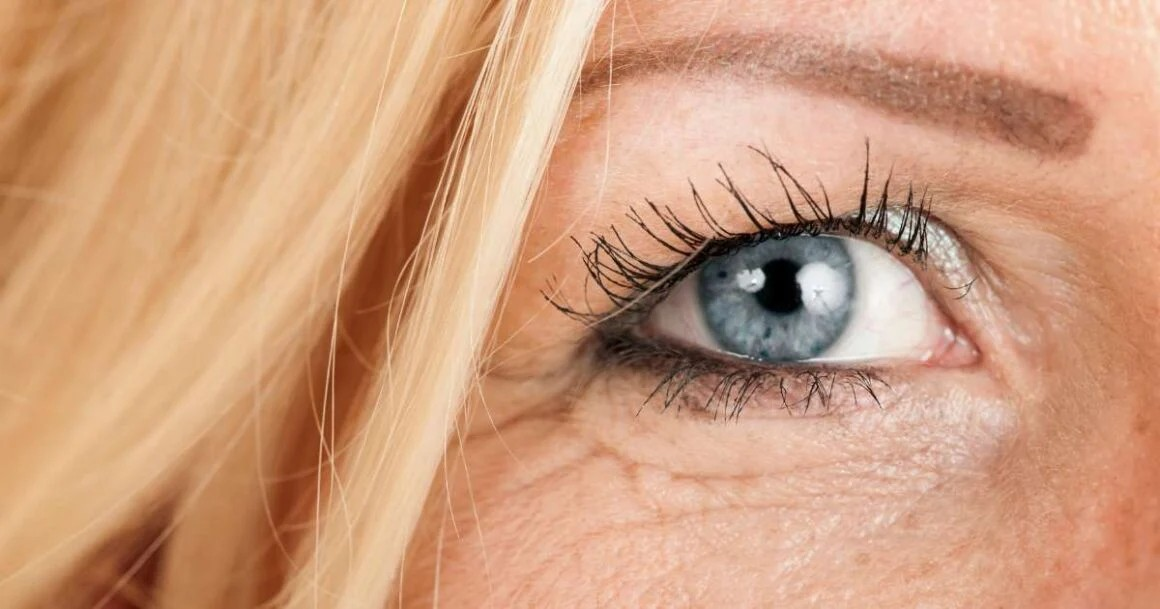
Fine lines often become more noticeable during menopause because dehydrated skin loses some of its plumpness.
When the skin lacks moisture, lines and wrinkles can appear deeper and more pronounced. Hydrating moisturizers help soften this appearance by improving water content in the skin.
While no moisturizer can completely erase wrinkles, many can noticeably improve how the skin looks and feels.
Ingredients like hyaluronic acid temporarily plump the skin, while peptides and retinol support longer-term collagen production.
Rich moisturizers can also create a smoother surface texture that reflects light better, giving the complexion a healthier and more radiant appearance.
This is why hydrated skin often looks younger even when wrinkles are still present.
Why SPF Moisturizers Are Helpful
Sun protection becomes even more important during menopause because aging skin is more vulnerable to sun damage.
Ultraviolet exposure accelerates collagen breakdown, pigmentation, and skin thinning. Dermatologists repeatedly stress that sunscreen is one of the most important anti-aging tools available.
Many women prefer moisturizers with built-in SPF because they simplify the morning routine.
However, the SPF needs to be broad-spectrum and ideally at least SPF 30 to provide meaningful protection.
Some SPF moisturizers designed for mature skin also include hydrating ingredients like ceramides and antioxidants, which makes them especially beneficial for menopausal skin.
Daily sun protection can help preserve the improvements your moisturizer is making.
The Best Moisturizers for Sensitive Menopausal Skin
Sensitivity often becomes one of the biggest skincare challenges during menopause.
Products that once caused no problems may suddenly trigger redness, burning, or itching. This is usually a sign that the skin barrier has weakened.
For sensitive menopausal skin, simpler formulas are often the best option.
Dermatologists typically recommend avoiding alcohol-heavy products, strong fragrances, and unnecessary active ingredients.
Instead, look for calming ingredients such as colloidal oatmeal, aloe vera, panthenol, ceramides, and niacinamide.
Minimalist skincare routines are often surprisingly effective for menopausal skin because they reduce irritation and give the skin a chance to stabilize.
Sometimes removing irritating products can improve the skin more than adding new ones.
Overnight Moisture Loss During Menopause
Many menopausal women notice their skin feels driest first thing in the morning.
This happens because the skin naturally loses water overnight, and menopausal skin struggles more to retain hydration.
Using a richer nighttime moisturizer can help reduce overnight moisture loss significantly.
Some women even apply a thin layer of an occlusive product over moisturizer to help seal hydration into the skin while sleeping.
This technique is sometimes called slugging, although menopausal skin often requires a lighter version than what younger social media users promote.
The goal is not making the skin greasy. It is helping prevent excessive water loss while the skin repairs itself overnight.
Many women wake up with noticeably softer skin after adding a more nourishing evening moisturizer.
The Connection Between Skin and Sleep
Sleep quality often changes during menopause due to night sweats, hormonal fluctuations, and stress.
Unfortunately, poor sleep can also affect skin health.
During sleep, the body goes through repair processes that help maintain skin barrier function and collagen production. Chronic sleep disruption may contribute to dullness, dehydration, and increased sensitivity.
Skincare experts often point out that even the best moisturizer works better when paired with adequate rest and hydration.
This does not mean you need perfect sleep every night, but supporting overall wellness can absolutely influence how your skin responds to skincare products.
Why Gentle Cleansing Matters
Sometimes the problem is not the moisturizer itself. It is the cleanser being used beforehand.
Harsh cleansers can strip away natural oils and damage the barrier, making even expensive moisturizers less effective.
Menopausal skin usually benefits from cream cleansers, hydrating cleansers, or cleansing balms that remove makeup and sunscreen without leaving the skin tight.
Dermatologists frequently recommend avoiding overly foaming cleansers because they can worsen dryness and irritation.
A gentle cleanser allows your moisturizer to work much more effectively because the skin barrier remains healthier.
Skincare as Self-Care During Menopause
Menopause can be physically and emotionally exhausting. Between hormonal changes, stress, sleep issues, and body changes, many women feel disconnected from themselves during this stage of life.
A simple skincare routine may seem small, but it can become an important form of self-care.
Taking a few minutes each morning and evening to apply moisturizer and care for your skin can feel grounding and comforting.
Healthy skin is not about looking flawless or pretending not to age. It is about feeling comfortable in your own skin and supporting your body through change.
A moisturizer that helps your skin feel calm, soft, and nourished can also help restore a sense of confidence during a time when many women feel overwhelmed by physical changes.
Final Thoughts
Finding the best moisturizer for menopausal skin often requires a shift in mindset. Instead of focusing only on anti-aging promises, the goal becomes hydration, comfort, barrier repair and long-term skin health.
Menopausal skin typically needs richer, more nourishing products with ingredients like ceramides, hyaluronic acid, peptides, niacinamide, and fatty acids. These ingredients help replenish moisture, strengthen the skin barrier, and improve elasticity over time.
The best moisturizer is not necessarily trendy or expensive. It is the one that consistently leaves your skin feeling healthier, calmer, and more comfortable. With patience, consistency, and the right skincare products, menopausal skin can still look radiant, glowing and beautifully cared for at every age.